
Last year someone in cross-border beauty walked me through his arithmetic.
He said TikTok creator collaboration, meaning the TikTok Shop selling that runs on it, was his main sales channel, and it was heavy work. He sent over two hundred invitation messages a day: find a creator, open the profile, judge whether they fit, send the message. By the end of two hundred he was finished, and the next day was the same.
I asked how many of the two hundred converted. Three or five on a good day, none on a bad one.
That ratio sounds low, but it is normal in this line. TikTok Shop affiliate outreach is a numbers game: a few sales out of several hundred messages. So the direction of improvement is not doing less. It is staying organised at that volume.
TikTok Shop affiliate outreach runs opposite to how I would advise on another platform. On LinkedIn, for example, the whole point is restraint and precision. Here, volume is the method, and the problem is keeping execution quality from collapsing.
The chain is not that long
Break the action down:
- Open TikTok, go to search or the recommendation list
- Find creators of the target type by keyword
- Open the profile
- Read follower count, look at recent posts
- Decide whether they fit
- Tap the collaboration or message entry
- Choose the collaboration type
- Fill in the pitch
- Send
- Return to the list and continue
Ten steps. That looks longer than most scenarios, but each step is short, and steps 3 through 8 are almost entirely fixed. Only step 5 needs judgement.
The problem comes from that shortness. One message is a minute; two hundred is over three hours, all of it highly repetitive. Efficiency decays quickly across that span. You read profiles carefully for the first fifty and tap mechanically for the last hundred and fifty.
Which part can go
By that split the line is clear:
| Action | Hand over? |
|---|---|
| Open search, filter by keyword | Yes |
| Open profile, read follower count | Yes |
| Decide whether the creator fits | Half, so turn it into a rule |
| Tap the collaboration entry, choose type | Yes |
| Fill the pitch, send | Yes |
| Record who has been contacted | Yes |
I wrote half against step 5 because the judgement can be turned into a rule, but the rule has to be yours. Something like followers between ten thousand and two hundred thousand, active in the last three months, content mainly beauty. A flow can filter on that.
One caveat: the tighter the rule, the more opportunity it misses. Some creators who would fit perfectly fail your filter. So keep a manual review channel. Let the flow filter, then leave the borderline batch for you to look at.
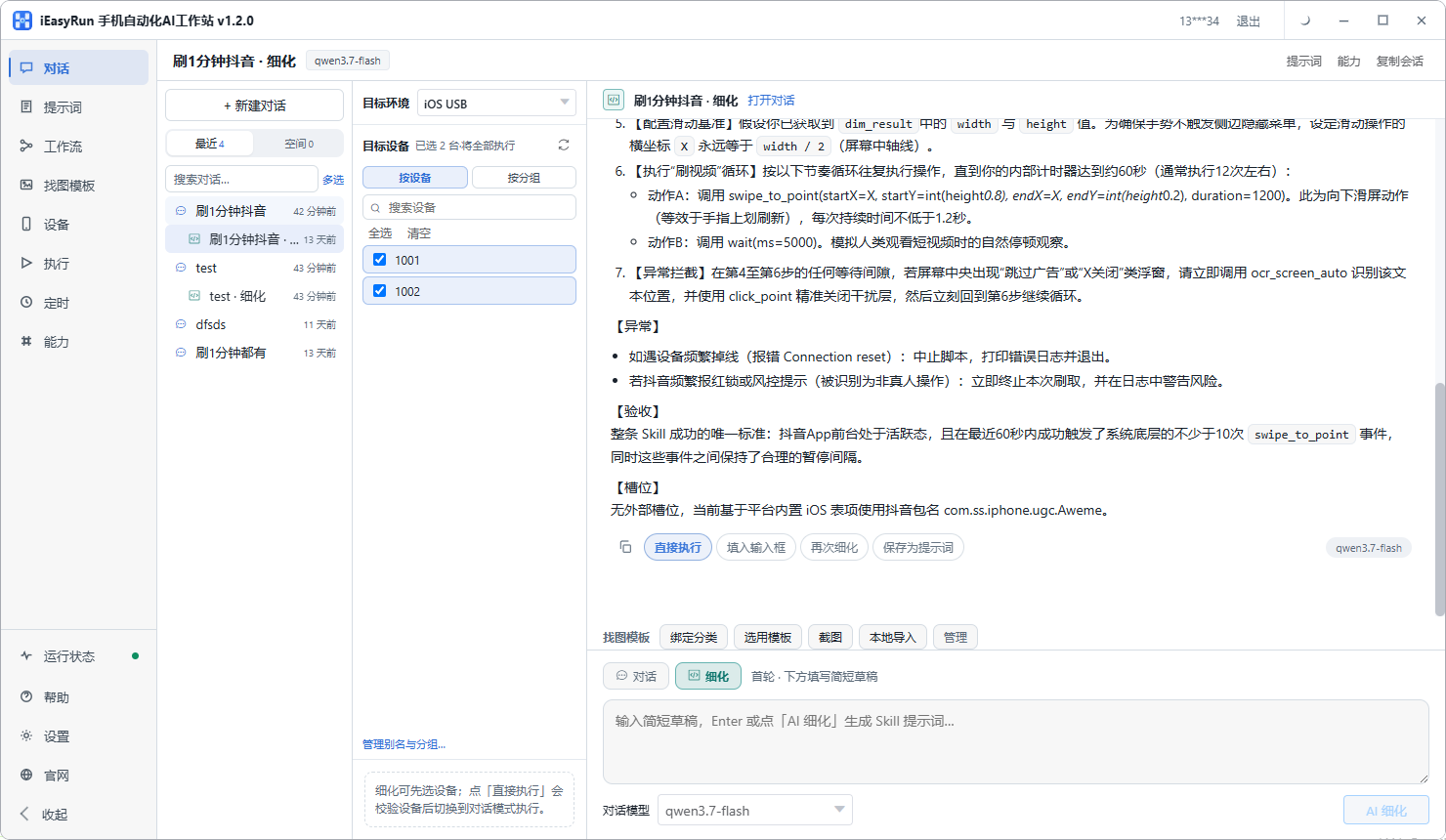
Segment the pitch by creator type
This is what decides your reply rate.
Segment by creator type, not by follower count. What drives a reply is whether you understand what they make, not how big they are.
One version can be organised like this:
- Beauty: lead with the category, the collaboration format and what you can offer
- Lifestyle vlog: emphasise the use case, slot the product into their daily narrative
- Unboxing review: highlight what is interesting about the product and leave room for their take
Inside each, keep a few variables: the creator name, something they posted recently, the sample or commission you can offer.
Those variables matter. They turn a line from a mass DM into something said to that person. Bulk creator DMs fail precisely when they read as bulk, and the reply rate drops accordingly.
In the flow, the pitch and its variables become parameters, passed in row by row. The table carries the creator identifier, which version to use, and the variable values.
The tracking table needs three states
TikTok Shop operations gets this wrong more than anything else.
Many track only sent or not sent. Two weeks later nothing is legible, because you cannot tell whether nobody replied, or you failed to follow up, or a sample went out and never converted.
I track three states:
| Column | Contents |
|---|---|
| Creator handle | The unique identifier |
| Pitch version | Which wording was used |
| Date sent | When the invitation went |
| State one: sent | Invitation delivered |
| State two: replied | They responded |
| State three: sampled | A sample shipped |
| Notes | Where it stalled |
With three states you can compute a real funnel. Two hundred invitations, forty replies, ten willing to take a sample, three sales. Every conversion rate is visible.
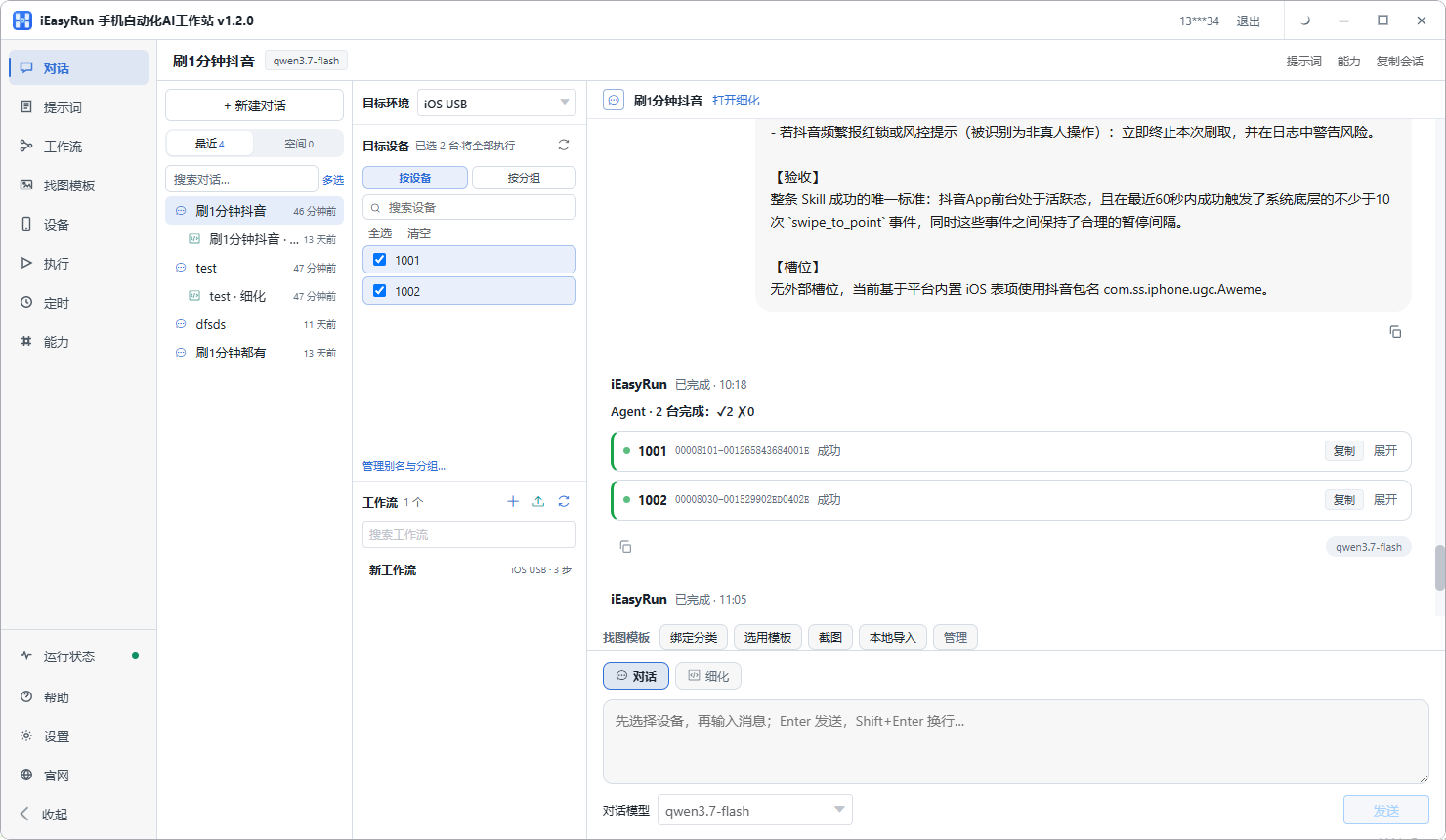
Once the funnel is visible, the work to do becomes obvious. Low reply rate means the wording. Replies failing to convert to samples means the terms. Samples failing to convert means creator selection.
Follow-ups need templating too
Sending is only the start. Follow-ups are where the time actually goes.
Fix a rhythm. One follow-up three days after sending, one more a week later, then stop. Three silences means stop, which saves time and avoids becoming a nuisance.
Follow-up wording templates easily, easier than the first message, because the situations are few: they missed it, they are considering, they have no slot right now.
One thing gets overlooked: follow-ups need recording too. If someone has been followed up three times and you are still going, the table is not doing its job.
Volume and rhythm
The volume here is higher than elsewhere, so the rhythm needs designing.
Do not push it all at once. Bulk creator DMs should be spread across the day with irregular gaps. Two hundred in half an hour does not look like a person.
Start low and work up. A few dozen a day, watch reply rate and account standing, then increase. Going straight to the ceiling leaves you nowhere to start debugging.
Vary the wording. Sending one script to several hundred people is inherently risky. Segmenting and adding variables serves the reply rate and looks more ordinary at the same time.
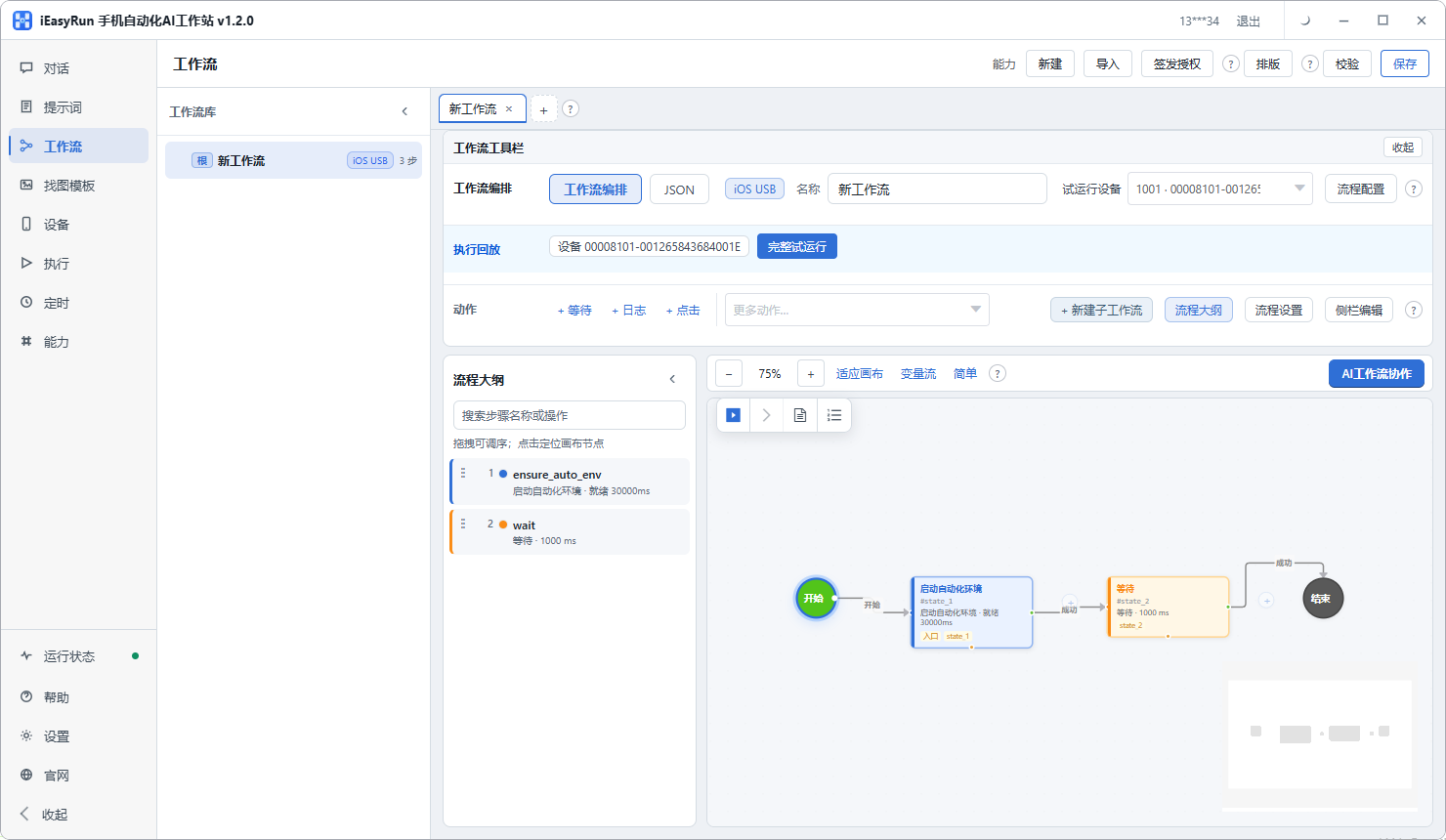
The boundary
This handles execution: finding creators, opening profiles, filling the pitch, submitting, all standardised so you are not tapping through it by hand.
It does not handle judgement: whether this creator is worth working with, what terms to offer, when to give up. Those decide whether the business works, and they are yours to answer.
One useful note: if you run TikTok creator collaboration or cross-border live commerce on several platforms, the shape of this flow carries over. What changes is the interface. What does not change is the spine: pick people, send invitations, log progress, follow the responses.
Back to the beauty seller. He split outreach into two flows, one filtering and first contact, one follow-ups, and expanded the tracking table from two columns to seven. His summary: it used to be I must send two hundred today, and now it is these fifty are worth sending, so send them and wait for replies.
If you run TikTok Shop operations and cross-border live commerce, connect one phone using the install selection page, run a small volume for a week, and get the three funnel ratios before deciding whether to scale.
Frequently asked questions
- How is creator outreach different from ordinary messaging?
- Volume, by an order of magnitude. Ordinary messaging is a few dozen a day. Creator outreach is a few hundred, and each one starts with opening a profile to look. So the design goal is not precision, it is staying organised at that volume.
- How many a day is reasonable?
- It depends on your store stage and the size of the creator pool. Start at a few dozen a day, watch reply rate and sample conversion, then increase. Going straight to several hundred means that when something breaks you have no idea where to start.
- How many versions of the pitch do I need?
- Segment by creator type, not by mood. One for beauty, one for lifestyle vlogs, one for unboxing reviews. Tone and terms differ between them, and inside each version leave variables such as follower tier or the kind of content they post.
- How do I track who has been contacted?
- Track three states, not one: invitation sent, replied, sample shipped. Separating those lets you compute a real funnel and see where it leaks. Tracking only sent or not sent becomes useless within a fortnight.
- How should follow-ups work?
- Fix a rhythm. Follow up once three days after sending, once more a week later, and then stop. Follow-ups should be templated too, or a few hundred invitations will bury you.
- Can this work if the interface is in English?
- Yes. The approach reads what is on the screen and then decides where to tap. You describe actions such as open the creator profile, read the follower count, tap invite to collaborate. No English reading is involved.
- How do I tell whether any of it is working?
- Three ratios: invitations sent to replies, replies to samples shipped, samples to sales. Whichever ratio drops hardest is the one to work on. That beats staring at how many were sent today.
- Could the platform treat this as spam?
- It could, so the rhythm has to look human. Do not push several hundred into half an hour. Spread them across the day with irregular gaps, and vary the wording, since repetition is what gets noticed.
Move the mechanical part out
Finding creators, opening profiles, sending invitations
Software is completely free and runs on your own computer.