
Last year someone running a cross-border news channel came to me saying his subscriber count was falling badly.
I asked how often he posted. Daily at first, he said, then every two or three days when work got busy, then two or three times a week. The decline started around then.
How long does one post take, I asked. Under two minutes. Pick an image, write two lines, add a link, send.
And that is the whole problem. It takes two minutes, but it has to happen every single day. The cost per instance is low enough that it never gets planned, so it always ends up behind everything else. The daily mental load is high enough that busy weeks break it. Falling subscribers is not a content problem. It is a continuity problem.
A channel runs on cadence
Worth settling first, because everything follows from it.
Telegram channel operations differ from most platforms. There is no recommendation algorithm working for you. Subscribers joined voluntarily and leave just as easily. So the value of a channel rests almost entirely on a steady cadence: post every day and people form the habit of looking; stop, and the habit disperses and is very hard to rebuild.
And “a small thing that has to happen daily” is precisely the category people break first. That is not a willpower problem, it is a design problem.
The fix in Telegram channel operations is simple. Take the act of posting out of your daily memory.
Prepare weekly, publish daily
Most people post whatever seems good that day. That works when you are in form and collapses when you are not.
The change I suggest is to shift the rhythm: prepare weekly, publish daily.
Before the weekend, spend an hour preparing the coming week in one sitting, as a table:
| Time | Type | Text | Image |
|---|---|---|---|
| Mon 09:00 | Image + text | … | 03 |
| Mon 18:00 | Forward | … | — |
| Tue 09:00 | Image + text | … | 04 |
With the table written, the week is fixed. From then on you make no decisions, because the decisions were made on the weekend.
The shift looks small, but it moves the two draining questions, whether to post and what to post, from daily to weekly. In overseas community operations that difference is what keeps a channel alive.
Configuring Telegram auto posting
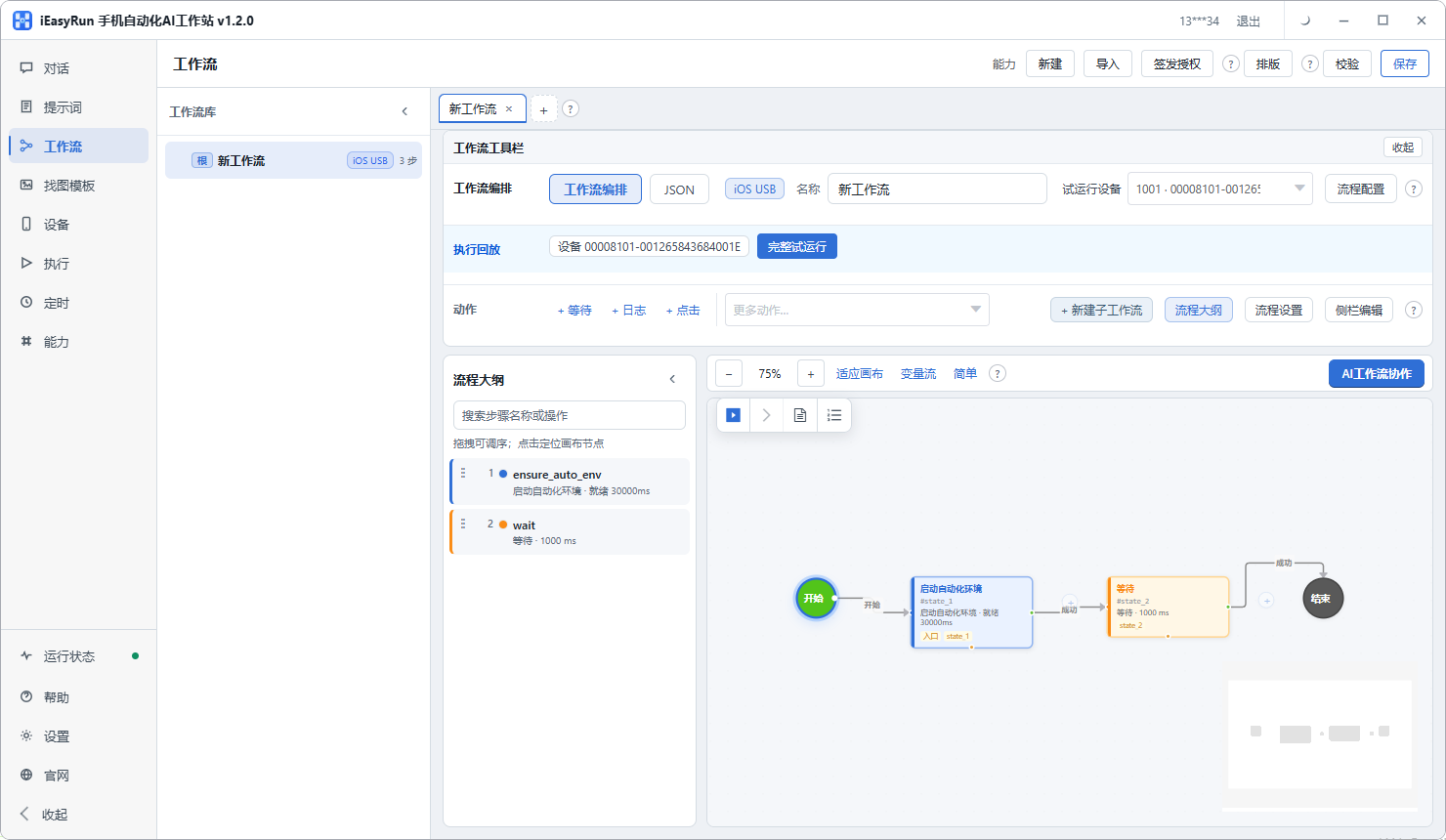
The Telegram auto posting action is short: open Telegram, enter the channel, tap the posting entry, choose an image, fill in the text, tap send. Five steps.
On the conversation page, pick the phone and describe it in refinement mode:
Open Telegram, go to the channel I specify, tap the posting entry at the bottom, choose the image I name from the library, put in the text I give you, and stop in front of the send button without sending.
Leave manual confirmation at first. Once it runs cleanly, save it to workflows, leaving text, image index and forward flag as parameters.
Forwards run through the same flow. A forward takes one extra step: find the item in the source channel, tap forward, choose the destination. That templates too, with one more parameter for the source item.
Choosing the time slots
Channel active hours depend on where your subscribers are. If they cluster in one region, work around that region evening.
For scheduled content publishing, my advice is to start with one or two main windows, not five. You do not yet know which window performs, and more slots only make the review harder.
Once the schedule is running, look at two weeks of data, drop the weak windows and keep the strong ones: scheduled content publishing doing its job: routine decisions made once and then repeated.
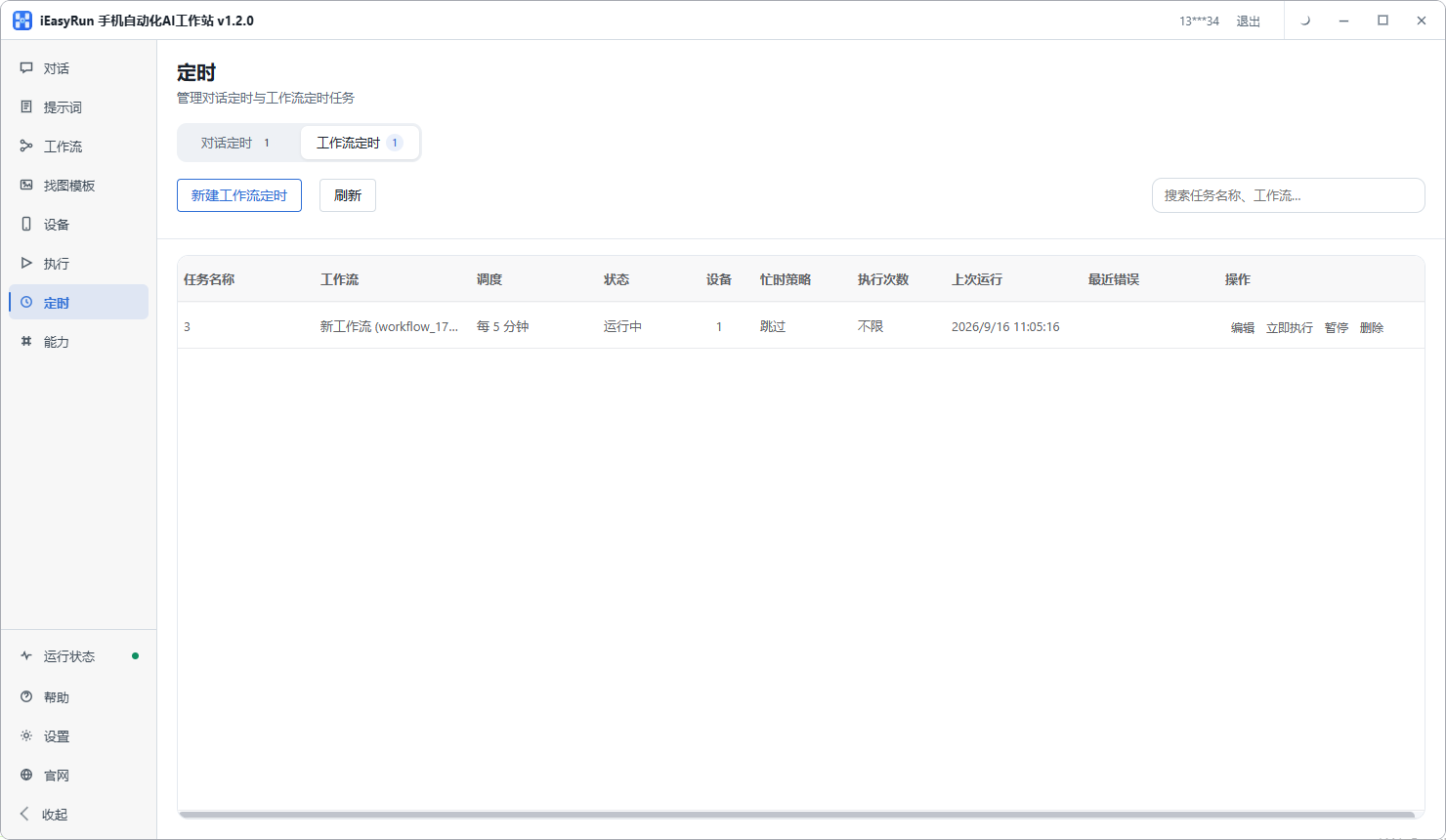
Three prerequisites, because missing one means nothing fires: the workstation open, the computer not sleeping, the target phone online.
Several channels
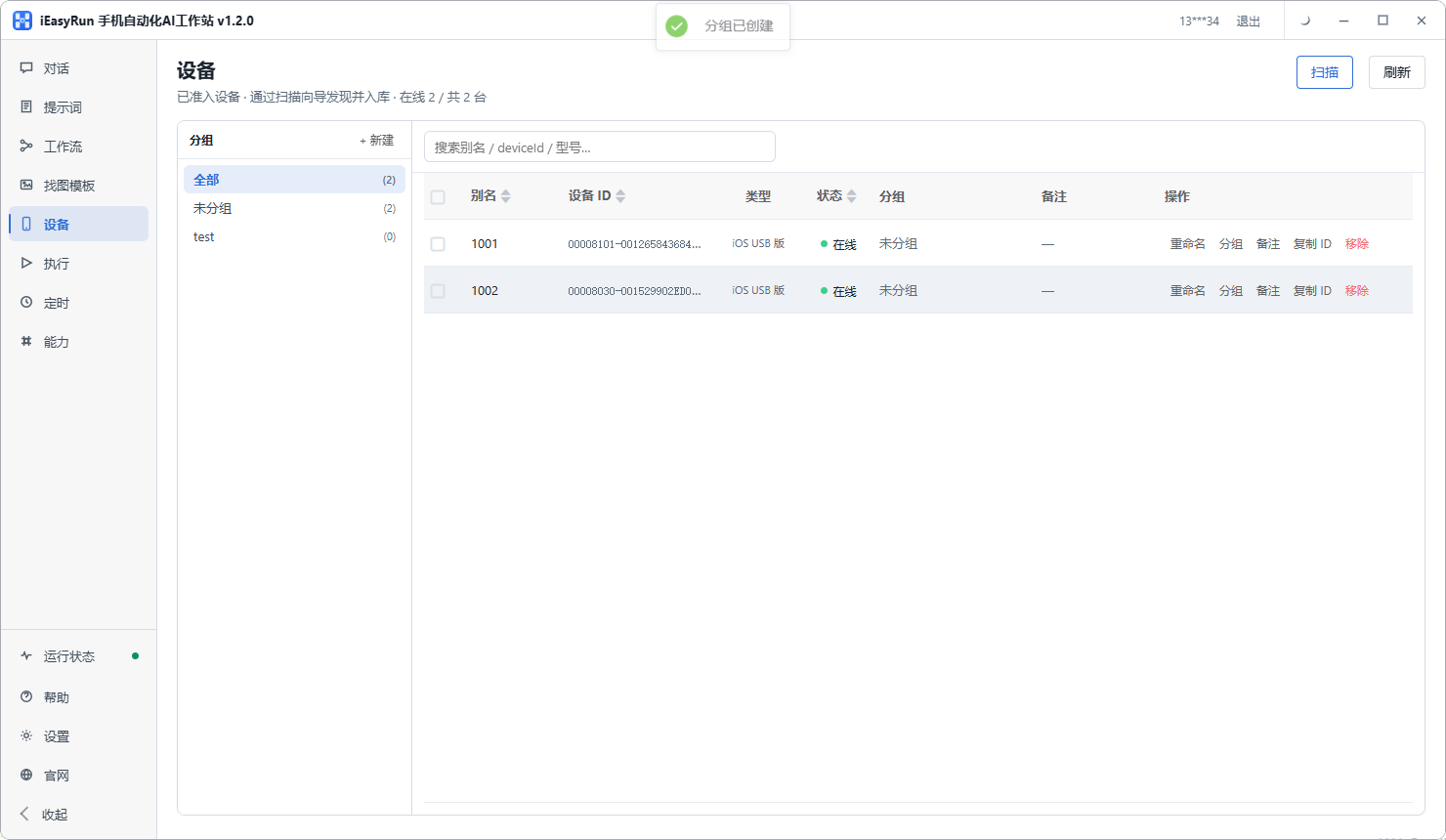
One channel per phone, aliased with the channel name, grouped by language or region.
The benefit is that each channel keeps its own content table. A Chinese channel and an English one differ in topics and rhythm, and separate parameters keep them from contaminating each other.
Telegram group management
Some of it fits the same approach.
Template-friendly : recurring house rules, welcome messages for new members, event reminders, mute notices. Fixed in form, variable in content, exactly like posting.
Must stay human : handling disputes, judging who is causing trouble, deciding whether to remove someone. Those involve reading people, and the risk of automating Telegram group management that far is too high.
When a post does not go out
Check Execution History line by line. Channel posting failures come down to three causes:
- Device offline, so check the phone on the device page
- Wait too short, since an image upload takes time and the next step fires before the screen changes. Widen it by a second or two
- Button not recognised, usually a bare icon, which an image template fixes
The boundary
This solves execution: taking content that is already decided and publishing it at times that are already decided, reliably.
It does not solve the content itself: what to cover, what gets forwarded, when to jump on a news cycle. Those decide whether the channel grows, and they are where the operator value sits.
So once the flow is running, do not spend the hour you saved on something else. Spend it on content. That is where the channel actually needs you.
Back to the news channel operator. He now spends an hour on the weekend preparing the coming week and ignores publishing entirely on weekdays. Daily posting resumed and the decline stopped. His summary was neat: it used to be I still have not posted today, and now it is today post is already in the table.
If you run overseas community operations, connect one phone using the install selection page, start with daily posting on one channel, and copy the setup to the others once it holds.
Frequently asked questions
- What is genuinely hard about Telegram channel operations?
- Sustaining it. A channel keeps subscribers through regular posting, and two quiet weeks shows in the numbers. But the daily cost of posting by hand is high enough that a busy week becomes two quiet weeks. What has to be solved is continuity, not speed.
- How should channel content be scheduled?
- By the week, not by the day. Prepare the whole coming week in one sitting before the weekend, then let each item go out on its slot. A day when you are not in the mood no longer breaks the streak.
- Can mixed image-and-text posts and forwards be automated?
- Yes. A forward is the same flow aimed at an existing item plus a destination. An image-and-text post is the same flow with a couple of extra steps for choosing and ordering images. Fixed actions in a fixed order fit a template.
- How do several channels get managed separately?
- One channel per phone, aliased with the channel name, grouped by language or region. Each channel keeps its own content table and parameters, so the schedules never contaminate each other.
- A scheduled post did not go out. Where do I look?
- Execution History records the source, status, target device and error for every task. The usual causes are a device that is offline, a wait that is too short, or an icon button that could not be recognised.
- Does the posting time matter?
- It does. Active hours differ by region and by content type. Start with one or two main windows based on where your subscribers are, run it for two weeks, and adjust from the data rather than launching with five slots.
- Can content preparation be automated?
- No. What to cover, how to write it, when to jump on a news cycle: those are the core judgement. What can be handed over is the act of posting, plus recording what went out.
- Does Telegram group management fit the same approach?
- Partly. Recurring house rules, welcome messages, event reminders and mute notices are fixed in form and variable in content, so they template well. Handling disputes and judging who is causing trouble must stay with a person.
Move the posting out
Line up the content in the morning, let it go out on time
Software is completely free and runs on your own computer.